Before the exotics, there was a long run of hard builds, fast cars, and lessons that stuck.

Jérémie's story matters because it explains why the shop feels the way it does. The work did not appear overnight as a polished exotic service. It was built over decades through maintenance, swaps, drag cars, feature builds, customer development, and the sort of trial that teaches a person where not to compromise. That history is what gives the current work its calm confidence.

Chronology

It starts small, gets fast, and eventually becomes the kind of work owners bring by name.

1993

The work starts early

Jérémie starts by maintaining his parents' vehicles, then begins installing performance parts on his own car and his friends' cars. Before long, school word-of-mouth turns that obsession into steady side work centered on Volkswagen, Audi, and other European platforms.

1997

The first breakthrough arrives fast

A Corrado VR6 swap into a 1987 Jetta proves the point. That same summer, a 1991 MK2 Golf runs 12.48 seconds at 113 mph at Napierville Dragway, becomes the fastest European compact there that year, and starts attracting magazine attention.

2000s

Show cars become serious development cars

The early 2000s bring feature cars, show wins, and much harder mechanical ambition: VR6 turbo builds reaching 472 whp, a Golf GTI 20th AE pushed from a careful 351 whp baseline to a 690 whp, 9,800 rpm outlier, and a growing reputation for going far beyond cosmetic tuning.

2004-2008

The R32 changes the scale of the story

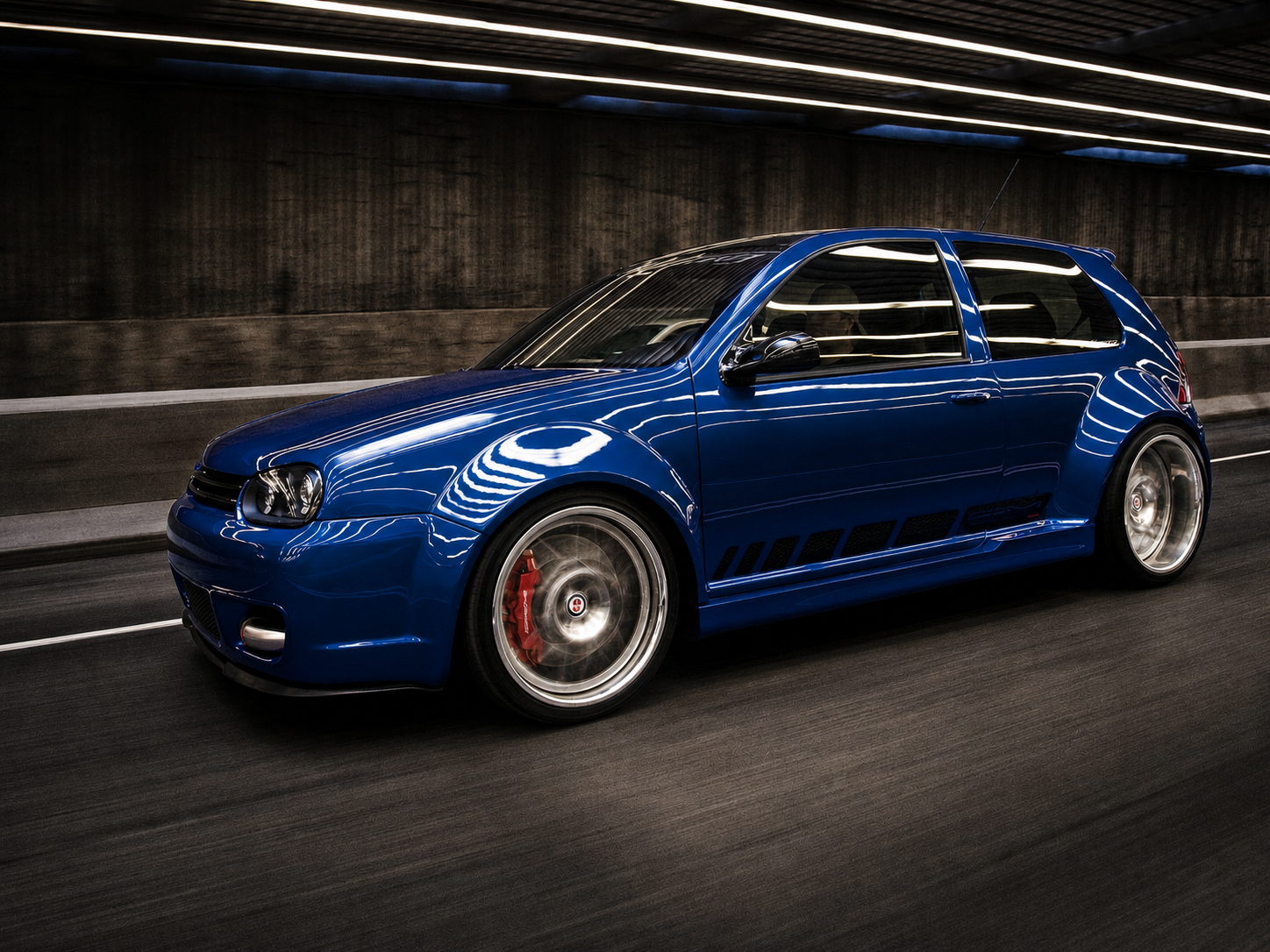
When the MK4 Golf R32 arrives, Jérémie imports two and keeps one to develop. The deep blue car becomes a hand-built, turbocharged widebody statement, known for years as the most powerful street-driven R32 in the world, with roughly 900 hp and the chassis work to make that power usable.

2009-2017

The modern VAG era becomes repeatable

As EA888, EA837, and later twin-turbo V8 platforms arrive, the work stops being one-off theatre and becomes repeatable customer performance. 650 hp EA888 cars, 500+ hp supercharged V6 builds, and multiple 750 hp twin-turbo V8 customer cars become part of normal shop language.

2018-now

Now the same standard is applied to exotics

Client demand shifts toward Huracans, RS cars, Urus, RS6s, RS7s, and other high-output VAG exotics. The brief stays disciplined: daily-driver behavior, preserved reliability, and real four-digit power. Multiple 1000+ hp street cars follow, including exotics that run 283 km/h over the half-mile and 9.82 seconds at 143 mph over the quarter-mile.

Jérémie Arpaïa's blue Volkswagen Golf R32 from the MotorTrend article
756 whpReported for the featured Golf R32 build
9.82 secQuarter-mile result cited in Jérémie's competition history

Published R32 proof

The blue R32 is the reputation chapter that put the name on the map.

This is the car that turns the earlier chapters into something visible. The MotorTrend and eurotuner coverage matters because it captures the moment the work stops being local folklore and becomes part of the wider performance conversation. It is not the whole story, but it is the chapter that made people outside the immediate circle pay attention.

MotorTrend / eurotunerfeatured Golf R32 coverage
PASMAGJA TUNING Golf R32 feature

Where the story leads now

After the R32 years, the work does not slow down. As the EA888, EA837, EA824, and EA825 platforms arrive, Jérémie keeps developing VAG cars at a higher and higher level: 650 hp EA888 builds, 500+ hp supercharged V6 setups, multiple twin-turbo V8 customer cars over 750 hp, and later the growing wave of Urus, RS6, RS7, S8, SQ7, SQ8, and RS Q8 performance requests that now define a lot of the modern work.

What came before that matters

The biography makes clear that this level of work was earned step by step. The 1990s were not just hobby years. They were years of maintenance, swaps, drag-strip testing, and problem solving on real cars with limited room for error. In the early 2000s, the show-car era brought visibility, but the mechanical side kept getting more serious: VR6 turbo builds crossing 472 whp and customer expectations rising with every result. That is why the later exotic chapter does not feel like a sudden reinvention. It feels like the same discipline carried forward into more valuable machines.

Development, not just modification

One of the most revealing parts of Jérémie's story is the way he talks about limits. The 20th Anniversary GTI first reached 351 whp on the original 1.8T before reliability became the line that could not be crossed casually. Only after that did the project move into a far more unusual direction, ending up as a 9,800 rpm 1.8T build with help from Dahlback Racing and TK Race Heads, producing 690 whp and 570 lb-ft. That progression says a lot about the shop mindset: find the honest ceiling first, then go further only when the supporting engineering is worthy of it.

The exotic chapter follows naturally

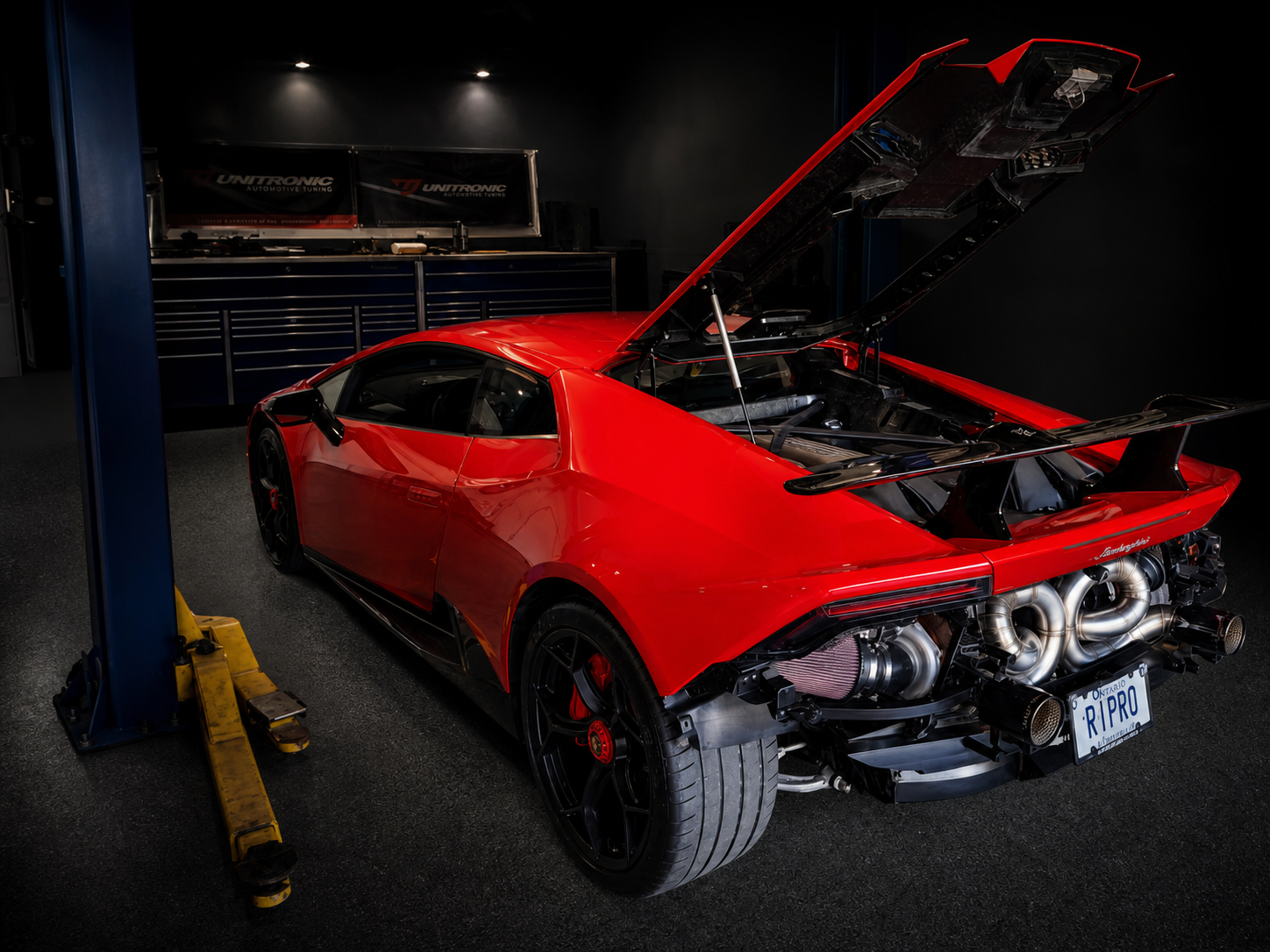
By the late 2010s, customer demand shifts toward Audi R8s and Lamborghini Huracans built as true street cars with 1000 hp and more. The brief is not just headline power. It is daily drivability, factory-like behavior, and reliability that still feels intact after the work is finished. According to the bio, that challenge is met repeatedly, including exotic builds that reach 283 km/h over the half-mile and 9.82 seconds at 143 mph over the quarter-mile.

The scale changes, the standards do not

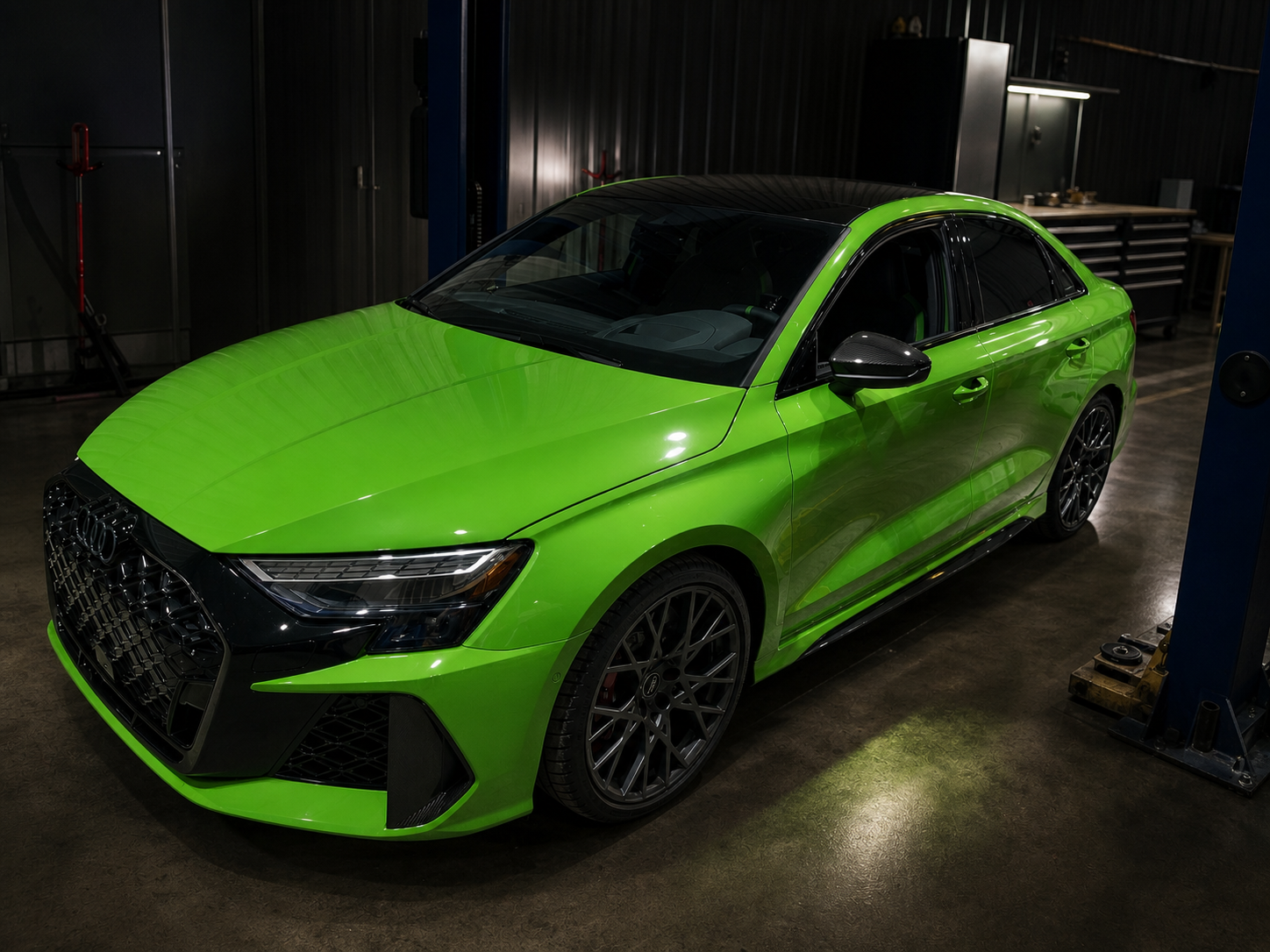
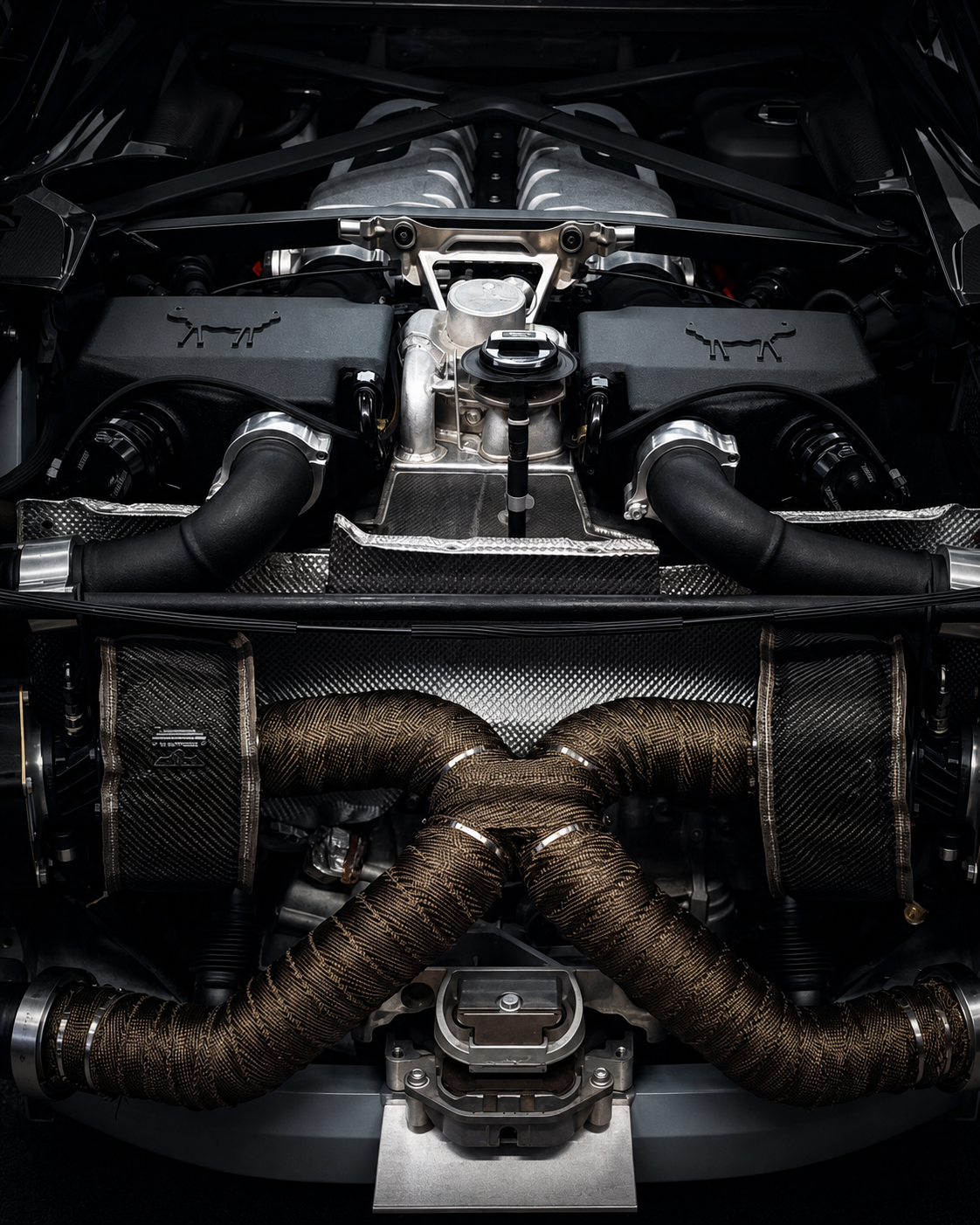
That is the point of showing the Lamborghini Huracan, the green Audi sedan, and the finished engine bay beside this story. They are not random glamour shots. They are evidence that the same hands-on thinking now lives inside a very different class of vehicle. Whether the platform is an old Volkswagen, a serious Audi RS car, or a Huracan street build, the through-line is still the same: understand the platform, build the system properly, and do not chase the number if the complete car cannot live with it.

Why owners still bring the cars here

The reason the shop feels private is that the work is still carried directly by Jérémie's own judgment. The bio makes that plain: customers continue bringing increasingly serious vehicles because they trust that the performance gains will not come at the expense of reliability, and because the improvements are approached as complete vehicles, not just as parts to install.